
Most descendants of Polish citizens wonder what documents are necessary to start an official Polish citizenship case almost immediately after reading the sentence: you are eligible for Polish citizenship. And it’s obvious, as no one wants to hit a snag after paying for the citizenship process. In this article we’ll lift the veil on the must have documents necessary to have a successful case.
Long story short: the process of getting Polish citizenship confirmation is about proving 3 things (altogether):
- that your ancestor(s) are or were Polish citizens,
- that your Polish ancestor(s) haven’t lost their Polish citizenship,
- kinship between you and your Polish ancestor(s).
You can prove the above by the 5 types of documents, so let’s start listing.
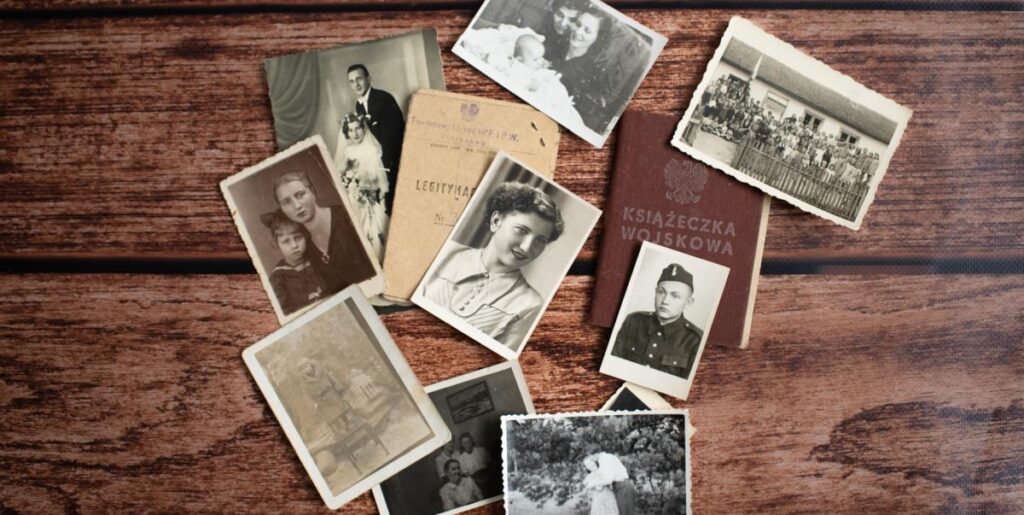
Polish documents
It’s important to have Polish documents that prove your ancestor(s) Polish citizenship. Also, you should know that Polish Offices accept specific kinds of these documents, even though there is no official instruction. Great papers are:
- expired Polish passports / IDs (the older, the better);
- applications for Polish passport / ID;
- population censuses / residence registers;
- voters list;
- Polish military documents.
More information on these documents and examples of them are provided in our blog article: 4 documents that will prove your Polish citizenship (and can be found at your house). Additionally, if you are curious why on earth birth certificates don’t prove one’s Polish citizenship, we’ve answered it in this piece: Why does a Polish birth certificate not prove Polish citizenship? A few words about the right of blood.
Naturalization certificate
It’s a document proving that you or your ancestor acquired citizenship of a country other than Poland. It always lists a date of naturalization together with the name and surname of a person that acquired citizenship. If you don’t have the original naturalization document, you can ask the relevant office for a certified copy of it. In order to do so, you shall contact:
- The National Archives – in case of British citizenship acquisition,
- National Archives – in case of US citizenship acquisition. Please note that getting a copy of the Petition for naturalization is great as well!
- Library and Archives Canada – in case of Canadian citizenship acquisition,
- National Archives of Australia – in case of Australian citizenship acquisition.
It may happen that you or your ancestor haven’t acquired any citizenship other than Polish. In such a case it’s necessary to obtain a document that confirms it (from the archives listed above).
Important: you need a naturalization certificate or non-naturalization document for the person that left Poland only.
Discharge document
Sometimes it’s necessary to get a document confirming the date of discharge from the non-Polish military. Usually, it happens if your male ancestor was naturalized before 18th January 1951. In case your ancestor didn’t serve in a non-Polish army, it’s necessary to get a paper for it as well.
This document is necessary only in case of being naturalized before 18th January 1951.
To get a discharge document or a paper proving that your ancestor was not serving in the army at all, you shall contact (usually) the same archives which keep the naturalization records.
Combination of a naturalization certificate and discharge document (or their variations) is necessary to prove that your ancestor hasn’t lost Polish citizenship.
Now that we covered proving of being a Polish citizen and not losing Polish citizenship, let’s move on to the last point: proving kinship between you and your Polish ancestor(s).
Vital records
To have a successful Polish citizenship case it is necessary to prove that you are related to your Polish ancestor(s). To do this, you need to provide birth and marriage certificates of a person that applies for Polish citizenship, as well as of all direct relatives that are related with Polish ancestor.
Example: if your paternal grandfather was Polish, we may need: your and your father’s birth certificates, as well as your, your father’s and grandfather’s marriage certificates (note: sometimes marriage certificates are not necessary).
Ordering vital records is usually pretty easy, you just have to contact the relevant Registry Office in your country.
Additional documents
This group seems pretty wide, but there are only a few documents that will fit here. If any kind of event happened during your or your ancestors lifetime, that may have influenced your case, it’s worth proving it by providing specific documentation.
For example, if anyone in your family formally changed name or surname, it will be necessary to provide a name / surname change certificate (Deed Poll in the UK).
Or, if you are divorced, you may have to get your divorce certificate as well.
It’s also worth knowing that all of the above mentioned documents (points 1-5) must be provided as originals or certified copies (hard copies). Polish offices usually don’t act on the basis of scanned copies of documents.
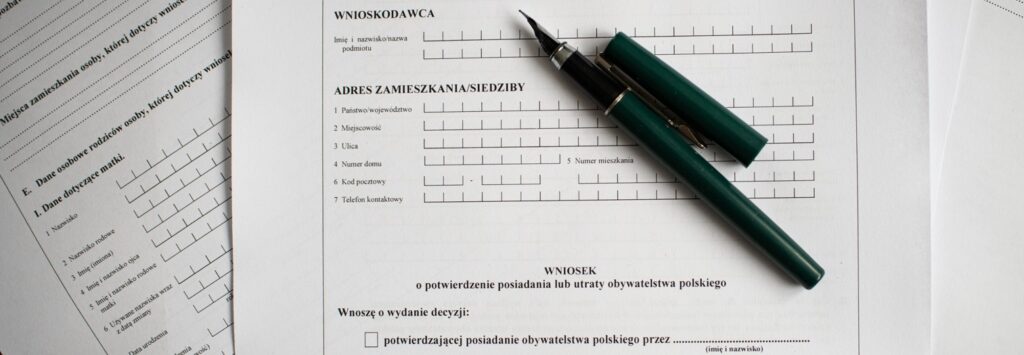
As each case is different, the list of documents required for the process may vary, but hopefully after reading this article you will have a rough idea of what is required. Bottom line is that we will prepare the exact list of documents necessary to get your Polish citizenship, tailored to your case. Precisely 🙂